
Yale Solutions for Home Center Material Handling Operations
A home center is not one building. It is a retail floor, a receiving dock, and an outdoor lumber yard sharing the same parking lot. Customers walk next to live loads. Mulch, treated boards, bagged concrete, and appliance pallets all move in the same hour. That is why home center material handling is a fleet problem, not a single-truck purchase.
Black Equipment is an authorized Yale dealer. We help home improvement stores, independent lumber yards, and farm-and-home retailers across Indiana, Kentucky, Tennessee, Arkansas, and Illinois spec indoor aisle trucks and outdoor yard trucks against the same Saturday rush. Reliability and versatility are not extras here. If the yard truck is down, the customer leaves without the load.
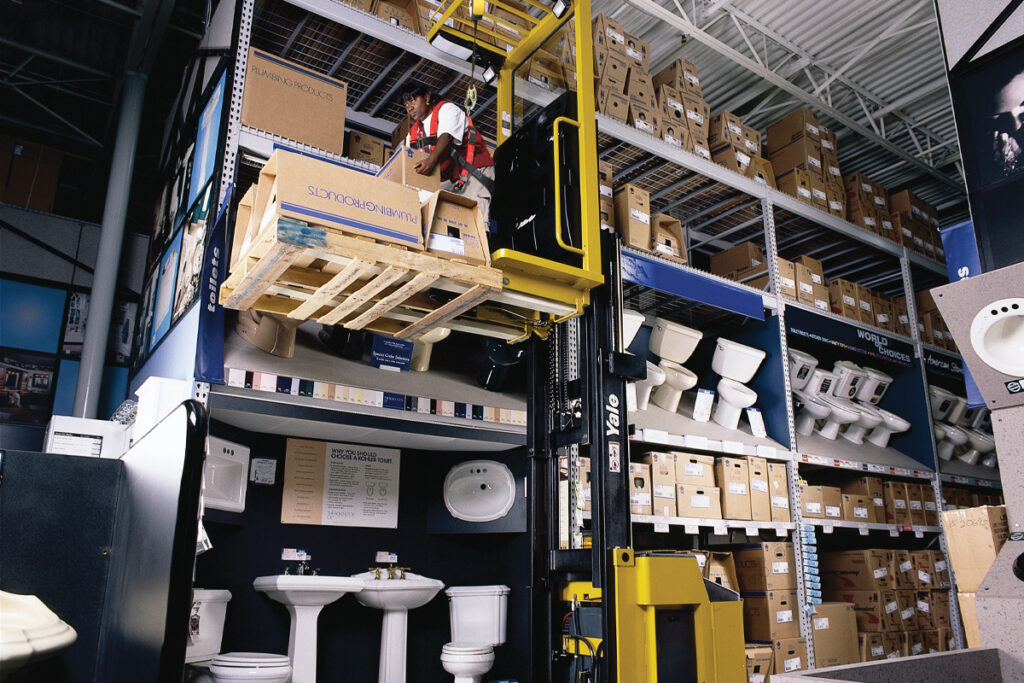
What to take away first
- One truck rarely covers the store and the yard. Indoor aisles want maneuverability and quiet, clean power. Outdoor racks want pneumatic tires (air-filled tires with a larger, more forgiving footprint) and consistent fuel.
- Indoor workhorse: Yale ERC045-070VG cushion-tire electric sit-downs in the 4,500 to 7,000 lb range, or the integrated lithium ERC050-060VGL in the 5,000 to 6,000 lb range when charging space is tight.
- Tight indoor and trailer work: Yale ESC30-40N three-wheel stand-up electrics in the 3,000 to 4,000 lb range for receiving and congested back rooms.
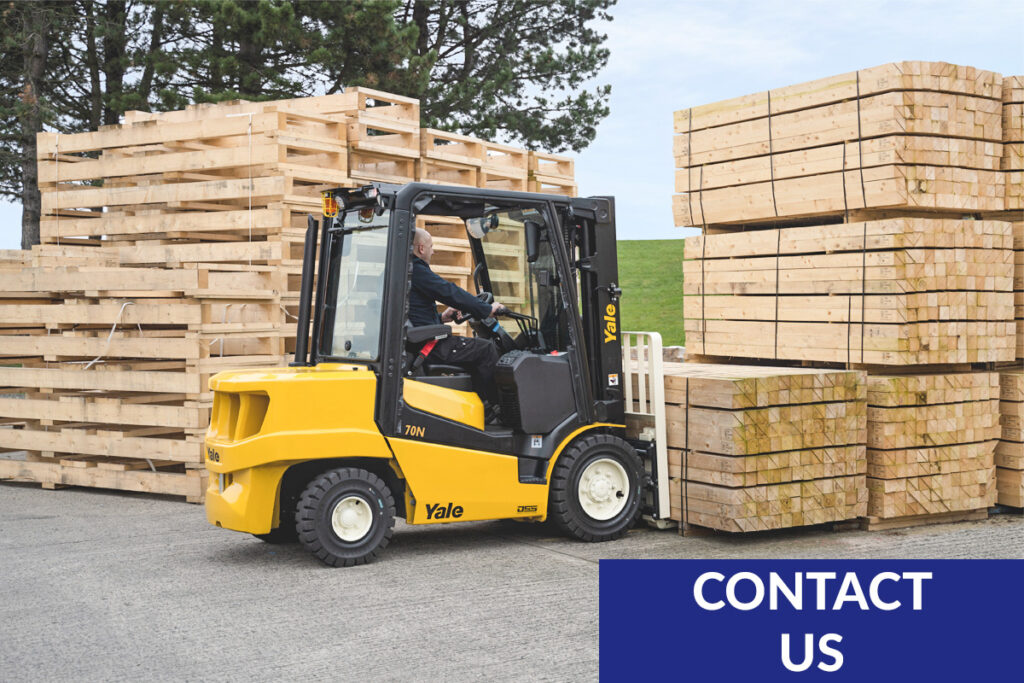
- Outdoor lumber and building materials: Yale GP040-070VX pneumatic ICE (internal combustion engine) trucks in the 4,000 to 7,000 lb band, with LPG (liquefied petroleum gas) still the common fuel in our territory. Heavier packs often step to the GP080-120VX.
- Floor travel is not a forklift job. Yale rider pallet trucks keep pallet moves off the sit-down fleet so the forklift stays on lifts, not on 40-foot walks across the garden center.
- Safety is a customer-experience item. Home centers are shared spaces. Visibility, predictable travel, and operators who are not fighting a truck that does not belong in that aisle matter as much as capacity.
- Peak season is a planning problem. Spring, storm rebuilds, and holiday promotions punish a fleet that was sized for January. Review hours, tires, and rental coverage before the first warm Saturday.
- A Black Equipment walk of the store and the yard is the clean way to test indoor versus outdoor split before you buy one “do everything” truck that does neither job well.
What makes home center material handling different
Home centers stack three businesses on one site. The sales floor is public. The warehouse or overhead rack is a warehouse. The treated-lumber racks, concrete pallets, and fence panels live outside in weather and ruts. Product variety is high. Volume swings with weather, tax-refund season, and local building permits. Customers stand in the same travel path the truck uses.
That mix changes the equipment question. A warehouse 3PL (third-party logistics provider) can isolate pedestrians. A home center cannot. A dead truck in January is annoying. A dead truck on the first 80-degree Saturday is lost tickets at the lumber desk.
Material flow is customer service. If bagged goods cannot get from receiving to the endcap, or if a 16-foot treated board cannot get from the yard to the load-out, the associate is stuck apologizing. Equipment selection is store performance, not a maintenance footnote.
Indoor and outdoor forklifts for home improvement stores
The risk is using one general-purpose truck for every task. A cushion-tire indoor unit sent into the gravel yard loses traction and chews steer tires. A large pneumatic yard truck squeezed down a retail aisle becomes a visibility and damage problem. Match the surface and the load, then accept that most stores need a small mix.
What we spec most often on home-center and building-materials sites:
- Indoor sit-down electric. ERC045-070VG cushion-tire trucks cover palletized indoor freight, overhead rack, and receiving on smooth slab. The ERC050-060VGL adds factory lithium-ion when the store does not want a battery room. See the broader electric forklift lineup when the indoor mix includes more than one capacity.
- Tight indoor and dock work. ESC30-40N stand-up electrics earn their keep in narrow back rooms and trailer bays where a sit-down wastes time getting on and off.
- Indoor LPG when the store still runs gas inside. GC30-40N cushion-tire LPG trucks remain a fit where charging infrastructure is not ready and the work stays on slab. They are not a substitute for a yard truck.
- Outdoor lumber and building materials handling. GP040-070VX pneumatic trucks in the 4,000 to 7,000 lb band are the usual yard conversation: long boards, uneven ground, and LPG cages the store already has. Heavier packs, block, and long travel push the spec toward the GP080-120VX, a series Yale itself lists for home centers and lumber. Browse IC pneumatic tire forklifts when the yard loads step outside that band.
- Horizontal moves on the floor. MPE060-080VH rider pallet trucks and the rest of the pallet truck category keep associates from tying up a counterbalance truck for a pallet that never needs to leave the floor.
- Power is a separate decision from the chassis. Indoor electric versus outdoor LPG is the usual split. For the fuller energy conversation, see Yale power sources and choosing between ICE and electric forklifts.
ROI (return on investment) here is uptime during customer hours, fewer product and rack hits, and not renting a panic truck every April. A cheaper mismatched unit that sits or scrapes beams is not cheaper.
Productivity that still protects customers
Home-center travel paths are public. Clear sightlines through the mast, predictable inching, and operators who can see fork tips before they see a cart matter more here than they do in a closed warehouse. Equipment design cannot replace training, but a truck with poor rearward visibility or grabby travel makes a trained operator look careless.
Consistency across shifts matters because the Saturday crew is not the same as the weekday receiver. A store that runs three different control layouts on three trucks spends peak hours relearning the machine. Keep the indoor fleet and the yard fleet each coherent so a floated operator is not guessing.
On Yale Series N indoor trucks, features such as the Dynamic Stability System (DSS) (a maintenance-free system that can limit speed, tilt, or lift when the combined center of gravity of truck and load gets risky) exist to support best practices. They do not replace a spotter in a crowded garden center. Treat them as a backstop, not a substitute for site rules.
Operator confidence shows up as smoother customer handoffs. A driver who trusts the truck places a bunk of lumber on a customer’s trailer without the drama that empties the next three parking stalls.
Seasonal swings and peak home-improvement periods
Demand is not flat. Spring lawn and garden, summer decks, fall fencing, holiday indoor freight, and storm rebuilds all change what leaves the yard. A fleet sized only for January midweek will look fine until the first warm Saturday.
Plan capacity before the spike:
- Walk hours and tire wear in late winter. A yard truck that is “fine” in February often fails in April.
- Decide what you will rent versus what you will own. Short peak coverage is a rental conversation. A missing everyday yard truck is a purchase conversation.
- Stage charging or LPG supply for longer days. Opportunity charging (plugging in during breaks) only works if the indoor crew actually plugs in. LPG only works if the cage is stocked before Saturday morning.
- Do not send the indoor electric outside to “help the yard” unless the tires, capacity, and weather actually allow it. That is how you create two problems.
Preparation is service level. The customer does not care that your PM (preventive maintenance) was due in March. They care that the 12-foot board is on the truck now.
Fleet size, cost control, and high uptime
The right-sized fleet is usually two jobs, not one oversized unit. Indoor hours on a cushion electric. Outdoor hours on a pneumatic ICE or a purpose-built outdoor electric. Pallet trucks for floor travel. That split looks like more iron on the quote. It is often less cost over a year because each machine stays in the work it can finish.
Cost control in a home center is mostly avoided disruption:
- Uptime during store hours beats a lower purchase price.
- Durability outdoors is a tire, steer-axle, and cooling-system story, not a paint color.
- A matched fleet cuts the hidden cost of product damage, rack hits, and an associate walking a customer back to the desk empty-handed.
Treat material handling as a multi-year store investment. Buying a one-way truck because it was in stock for opening day is how yards get stuck with the wrong tire type for five years.
Where Black Equipment fits
Retail and yard work is an application problem. Brochures do not see your garden-center crosswalk, your treated-lumber ruts, or the 10 a.m. contractor line.
What we can do:
- Walk the store and the yard and map indoor slab versus outdoor surface to a Yale indoor series and an outdoor series.
- Compare electric, LPG cushion, and pneumatic ICE against charging space, tank cages, and pedestrian rules.
- Check attachments, fork length, and mast height against 12- and 16-foot lumber, not against a 48-by-40 pallet.
- Train operators who work around customers, not only around racking.
- Build a PM and rental plan that assumes April and July, not only a quiet Tuesday.
- Stay after commissioning. Service response during store hours is part of dealer-supported home center solutions.
What we will not do is tell you one Yale truck covers every home center in five states. It does not. If the store needs an ESC stand-up on the dock, an ERC-VG in the box, and a GP-VX in the yard, that is the recommendation.
Common questions about forklifts for home improvement stores
These are the questions that come up on store-and-yard walks. Short answers first.
Do I need two different trucks for indoor and outdoor work?
Usually yes, if you have both a smooth indoor slab and a real lumber yard. Cushion-tire electrics belong inside. Pneumatic GP-VX trucks belong on gravel, broken asphalt, and wet racks. One truck forced to do both jobs wears out faster and works worse in front of customers.
What capacity do most home-center yard trucks need?
Size to the heaviest regular pack and the attachment, not the average bag of mulch. In our territory a lot of lumber desks land on the GP040-070VX 4,000 to 7,000 lb band. Block, longer bunks, and heavier building materials often move to the GP080-120VX. Always derate for sideshifters and long loads.
Can I run an electric forklift in the outdoor yard?
Sometimes, if the surface, weather, runtime, and charging plan say so. A cushion-tire indoor electric is still the wrong tire for ruts. If the yard almost never parks and already has LPG, ICE remains the simpler uptime plan. See choosing between ICE and electric before you force a battery truck outside.
How do I keep forklifts safe around customers?
Separate travel paths where you can. Use trucks with clear mast visibility. Slow the indoor fleet in public aisles. Train for load-out on customer trailers, not only for racking. Add a spotter when the garden center is crowded. Equipment helps. Site rules do the rest.
When should I add rental coverage instead of buying another truck?
Rent for a known short peak or a rebuild spike you cannot staff year-round. Buy when the same unit is essential every week. A home center that rents its only yard truck every spring is paying peak rates for a core job.
What should I inspect before spring peak?
Hours, tires, brakes, cooling, mast play, and whether last year’s attachments still match this year’s product mix. Then confirm LPG supply or charger capacity for longer Saturday hours. A PM written for indoor midweek will not cover a two-shift yard in July.
Get the store and the yard on purpose-fit trucks
If associates are dragging an indoor truck through gravel, or if the yard unit is doing aisle work it cannot see around, that is the signal. Spec indoor and outdoor equipment against the work, then put service behind both.
Ready to review the mix? Start at blackequipment.com/contact or call your local Black Equipment branch. We will walk the store and the yard, compare Yale indoor and outdoor options, and build a home center material handling plan you can run through the next peak.
Yale is a registered trademark of its owner. Black Equipment is an authorized Yale dealer serving operations in Indiana, Kentucky, Tennessee, Arkansas, and Illinois. This article is general planning information, not an engineering specification or a guarantee of runtime, safety results, or operating cost for any single site.
OR
Click for your local branch