
Motive Power Solutions
Hyster Power Match™ and Yale’s advanced power options give you one of the industry’s widest ranges of choices — lead-acid, thin-plate pure lead (TPPL), lithium-ion, and hydrogen fuel cells. Lithium-ion supports fast and opportunity charging; hydrogen offers rapid refueling for high-duty applications.
These Motive Power Solutions help maximize uptime, reduce energy costs and emissions, and match your exact operational needs for performance and sustainability.
Yale Power Key™ – Easily switch power sources on electrified lift trucks
Yale Class 1,2, & 3 Forklifts allow you to use the electric power source that best fits your application. Available on a broad lineup of Yale electric lift truck models, Power Key™ is a one-of-a-kind, flexible software that allows you to easily switch between lead acid, thin plate pure lead (TPPL) and lithium-ion battery modes, without external accessories.”
Mixed fleets in transition
If your fleet is moving from lead-acid batteries to options offering less maintenance, longer run times, and faster charging – then Power Key™ makes that process easier by letting you quickly switch between power sources.
Equipment used at multiple locations
Power Key™ makes it quick and simple if you need to use your lift trucks in multiple facilities – some with, say, lead-acid, others with TPPL, and another with Lithium-ion.
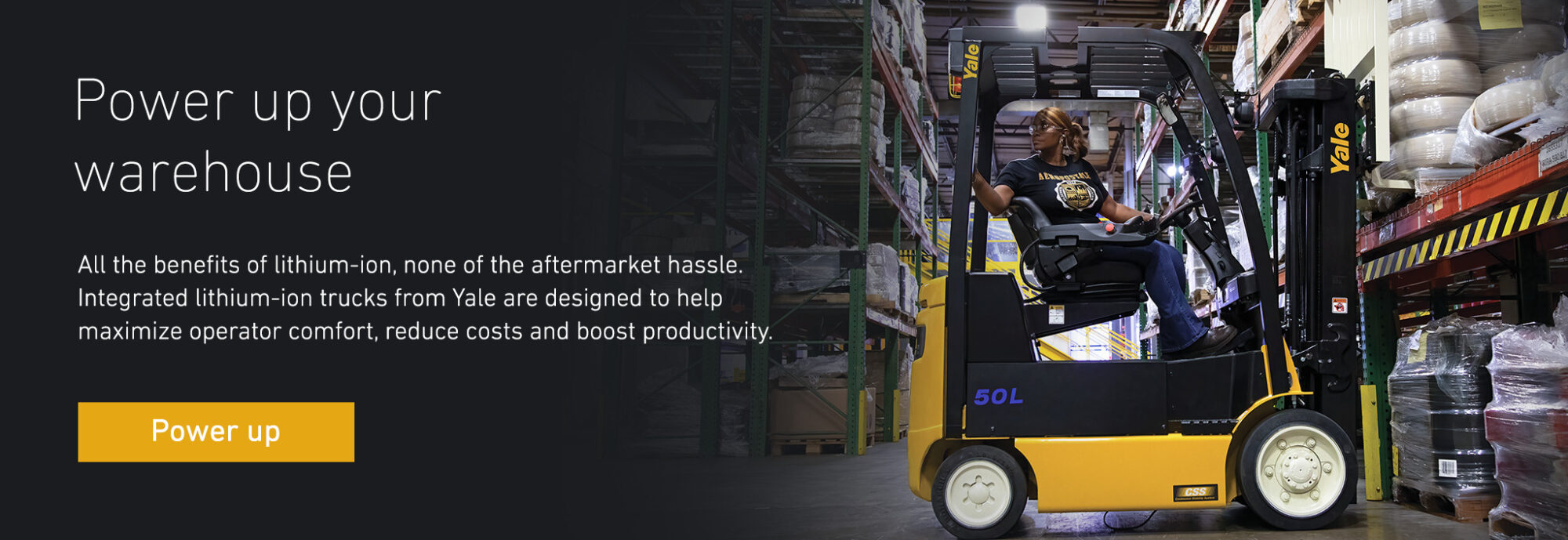
Power Key™ gives you access to an:
- Integrated battery-state-of-charge display
- Low battery early warning system (EWS) – with multiple warnings when charging is required
- Battery protection system that triggers a controlled shutdown on full discharge
- Additional battery data that’s available with Yale Vision telemetry (optional)
Lead-Acid Batteries
Lead-acid batteries are certainly a trusted workhorse in industries that require lift trucks & material handling equipment. For certain situations, they’re still a solid & intelligent compromise between cost and utility. However, they come with challenges that new technologies are solving.
The inefficiencies and slow charge time of lead-acid batteries require:
- Lots of space for charging
- An area for changing out batteries (usually around 20 minutes per change out)
- Lots of extra batteries because they typically require about 8 hrs. to recharge & 8 hrs. to cool before they can be used again.
- Regular maintenance which introduces the risk of contact with Sulfuric Acid.
TPPL – Thin Plate Pure Lead Batteries
Our Thin Plate Pure Lead Batteries have a lot of advantages over standard lead-acid batteries.
- Adapted to stop & go lift truck use
- No watering
- Better performance and longer lifespan
- Great for multi-shift operations
- Fast charging
- Longer shelf-life
Thin Plate Pure Lead batteries offer exceptional advantages, including higher charge acceptance, reliability, and the ability to maintain a charge over several days of use. They outperform standard batteries, showcasing resilience against extreme shock and vibration. Environmentally conscious, they are 98% recyclable. Ideal for multi-shift operations, these batteries support fast charging during breaks or at the end of a shift, requiring only one full charge and 2-hour equalization per week. With the appropriate charger, they can charge from 40-80% within just one hour, ensuring minimal downtime. Additionally, they have a long shelf-life and are resistant to corrosion.
Lithium-ion Batteries
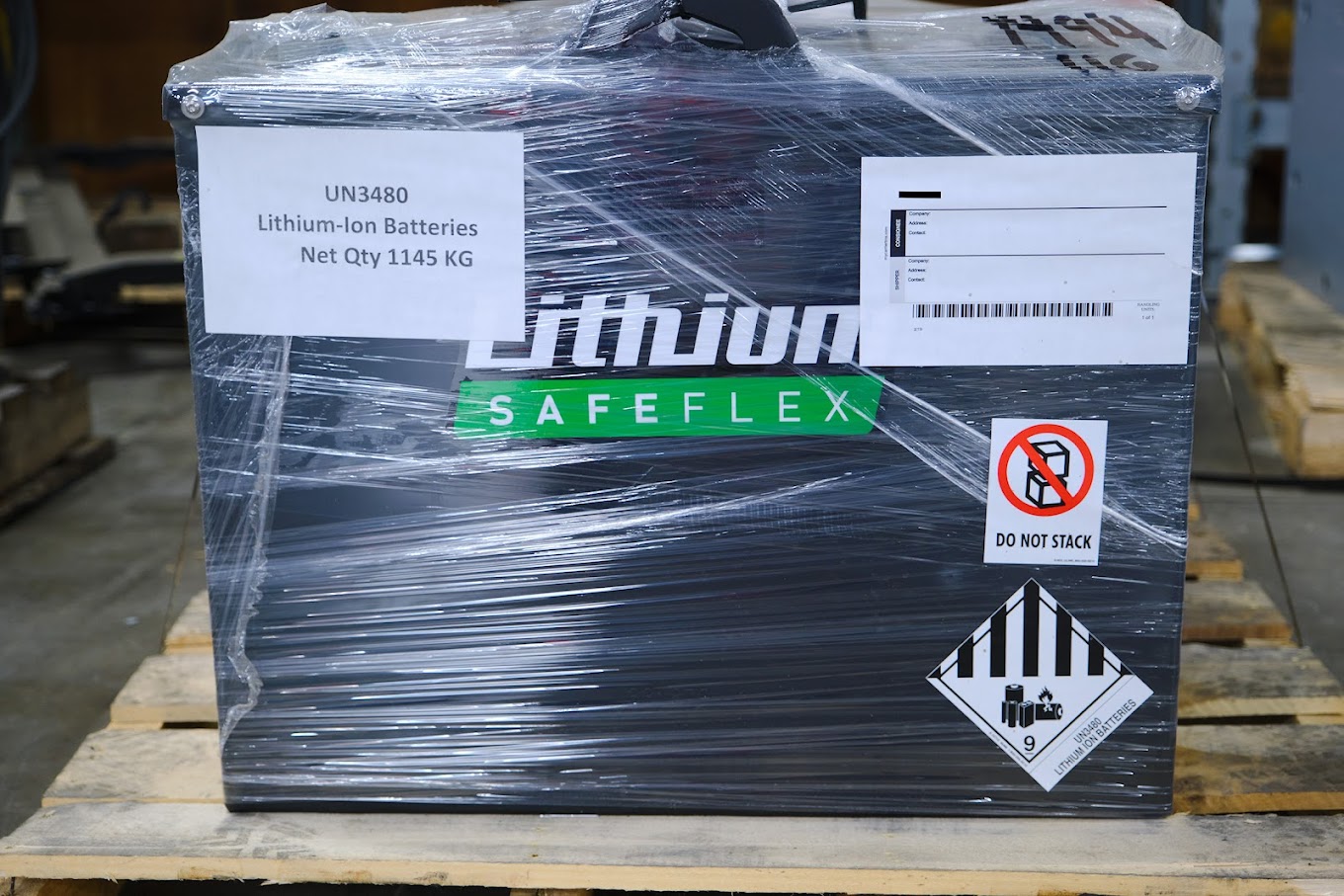
Black Equipment offers Premium Lithium-ion (Li-ion) batteries. These innovative batteries deliver intelligent & reliable flexible power. They’re available in multiple configurations, multiple sizes, and are integrated with innovative battery management technology that delivers increased productivity & profitability.
Not only does Black Equipment help you specify and install your batteries & charging stations, we have support from the world’s largest industrial battery manufacturer.
- Highest quality of cells, negating the need for active balancing which other suppliers employ
- CANbus communication
- Comprehensive Battery Management System (BMS) to protect your assets from over discharging and provides State of Charge (SoC) control for additional performance benefits.
- Its modular design allows you to scale as needed for additional capacity.
- Since identical modules are used in both motive & reserve applications, end-of-life modules may be repurposed as reserve power.
- Suitable for all applications
- Ideal for all opportunity and fast charging applications, allowing you to use them for 2-3 shift operations.
- Outstanding cycle life.
- Virtually maintenance free.
- Audible and visible state of charge (SoC) status.
- Laser welded cells and rugged construction
- Large format prismatic cell technology that delivers higher reliability
- Nickel Manganese Cobalt (NMC) chemistry for high volts per cell (VPC)
- Software control design incorporates innovative electronic systems that further improve performance, safety, and sustainability.
Hydrogen Fuel Cells
Hydrogen Fuel Cells
This innovative technology enables continuous operation throughout a full workday.
Hydrogen fuel cells boast a refueling time of 3-5 minutes, significantly faster than the 20-minute process required to replace a standard lead-acid battery. Furthermore, unlike lead-acid batteries, hydrogen fuel cells operate at full power until depletion, akin to internal combustion engines.
Forklifts can easily be retrofitted to hold a hydrogen fuel cell in the lift truck’s battery box.
To facilitate convenient refueling, hydrogen dispensers are integrated throughout your facility. Hydrogen, stored in liquid form is delivered and stored on-site via a trailer positioned outside your facility. This approach optimizes interior space previously designated for battery charging. The fuel tank is equipped with sensors and telematics, enabling remote monitoring and timely scheduling of fuel deliveries.
Consider hydrogen fuel cells to enhance throughput, regain space allocated to battery management, reduce emissions, and minimize battery disposal concerns.
Explore Yale Technology Solutions
Explore Hyster Technology Solutions