
What to Expect During a Forklift Repair Visit: From Dispatch to Service Completion
Intro
No warehouse or maintenance manager wants to think about their forklift encountering issues, but preparing for them will make all the difference. When your forklift needs a repair, responding in a timely and smart matter can get it back on the floor faster.
In this blog post, we discuss what to expect from forklift repair calls, as well as how to know when a call is needed, so you can respond to equipment issues with confidence.
A Note on Preventative Maintenance
Every technician service visit will look different, depending on the type of maintenance, equipment, service provider, and work environment. This article primarily covers what to expect during equipment maintenance and repair calls, rather than scheduled preventative maintenance visits.
- Preventative maintenance: Preventative forklift maintenance occurs on specific timeframes based on hours usage and allows you to proactively address minor issues before they become disastrous problems. Establishing a routine preventative maintenance schedule can help you extend the life of your equipment and save costs.
- Normal repair call: A normal or non-emergent repair may involve minor issues such as a leak, belt squeak, gage issue, or cosmetic damage. Your truck may be underperforming or even stopped working, but your operations can continue without significant impact on business.
- Emergency service call: You will want a technician to service your equipment as soon as possible if your equipment has broken down and is causing an immediate safety risk or significant harm to your business. For example, a broken truck that is blocking an aisle could be considered an emergency.
When to Call a Technician
Repairing your forklift in a timely matter is critical to preventing further equipment failures.
While some minor equipment repairs may be scheduled for a later date, every equipment issue that poses a safety risk should be addressed immediately by taking the truck out of service. Operating a vehicle with known safety defects violates OSHA regulations and could expose your business to liability, fines, and/or criminal charges if an accident occurs.
Be on the lookout for early warning signs of equipment problems by inspecting your equipment regularly. OSHA standard 29 CFR 1910.178 requires daily pre-shift equipment checks before operating any vehicle.
5 Common Equipment Warning Signs
Below is a list of top forklift warning signs that require immediate attention. If you experience any of the below issues, call your technician at once to schedule an inspection.
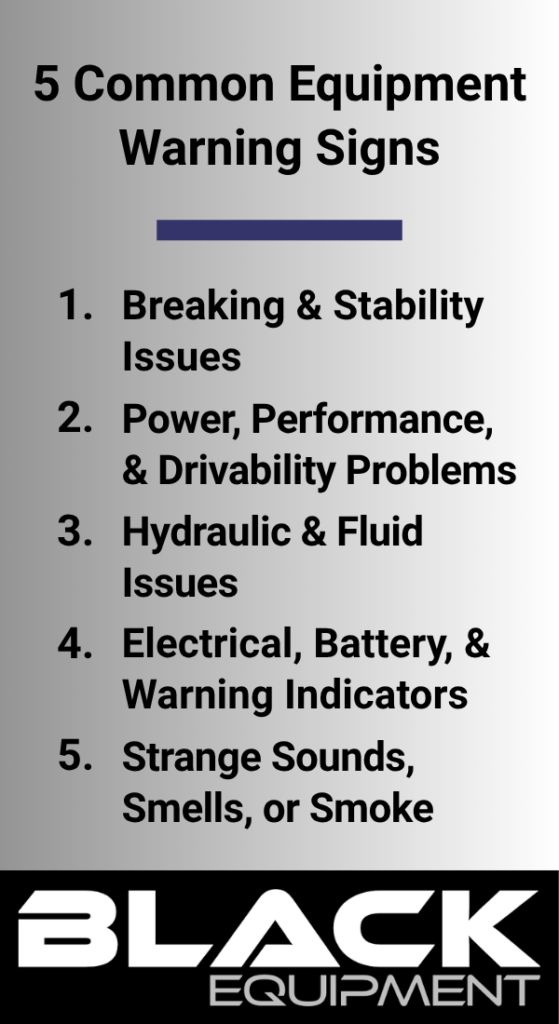
- Breaking and stability issues. This includes poor breaking or reduced stopping power, parking brake issues, tire or wheel damage (including flat spots, deep cuts, or loose lug nuts), and unusual vibrations while driving or lifting. Each directly affects load stability and operator safety.
- Power, performance, and drivability problems. A drop in performance can often signal hydraulic, engine, or electrical failures that can escalate quickly. Be on the lookout for a decrease in engine or motor power, reduced lifting speed or sluggish acceleration, difficulty holding loads at height, or overheating (especially with IC trucks).
- Hydraulic and fluid‑related issues. Leaks can lead to sudden loss of lifting ability or steering control. Monitor your forklifts for visible leaks of hydraulic fluid, engine oil, or coolant, fluid puddles beneath the forklift, or inconsistent mast or lift functions.
- Electrical, battery, and warning indicators. Electrical faults can often cause failures across multiple symptoms and should be addressed immediately. Indications of underlying electrical issues include:
- Dashboard warning lights or alarms, such as check engine, overheating, low oil pressure, or battery fault
- Battery problems, such as rapid discharge, difficulty holding charge, or corroded connectors
- Controls or steering become unresponsive
- Unusual sensory indicators. Strange sounds, smells, or smoke are often the earliest signs of mechanical or electrical failure. Call for an inspection if you or your operators hear grinding, squealing, or clunking sounds, smell burning rubber, fuel odors, or electrical burning, or smell engine smoke or excessive exhaust emissions.
By taking immediate action, you can resolve minor issues before they escalate into unplanned downtime, higher repair expenses, and possible safety hazards.
What Happens During a Forklift Service Call
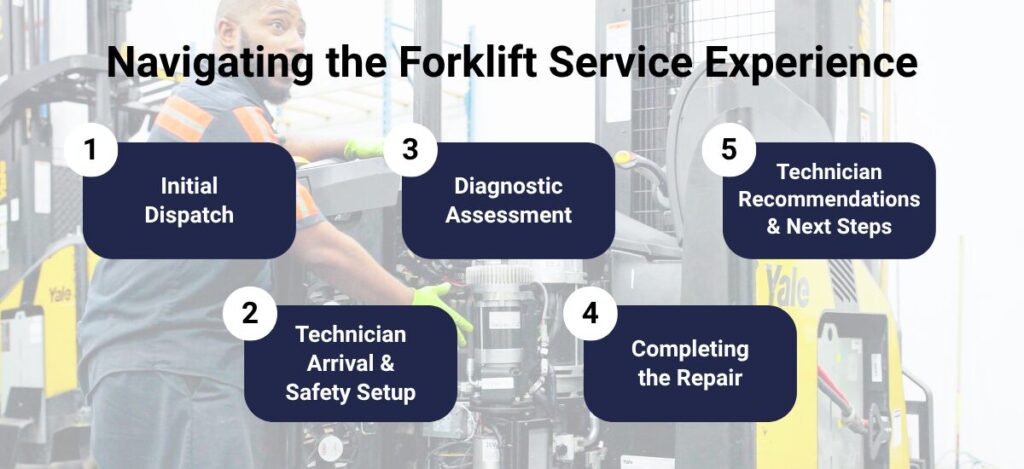
Knowing what to expect while working with a service partner can help you navigate the process more efficiently. The following is the typical forklift repair process you could experience with a reliable service partner.
1. Initial Dispatch
Calling your service partner is the first step to requesting and scheduling a technician visit. When you call, be prepared to provide your service partner with the make, model, and serial number of the affected vehicle and a description of the symptoms observed. This information will help the technician know which parts and tools he will need to complete the repair.
Your service partner should set response time expectations and confirm when the technician will arrive on site. Black Equipment dispatches technicians immediately for emergency repair calls and within four hours for normal repair calls.
If you’re operating in a large facility or plant, provide your service partner with the location of the broken-down unit. This will save the technician time spent searching for the unit, which allows him to get to work faster and lowers the costs of the visit.
2. Technician Arrival & Safety Setup
Once the technician arrives on site, they will get in touch with the person who requested the service as well as the person who experienced the equipment issue. They will gather as much information as possible about the situation and equipment’s symptoms.
Your technician will also perform a site check immediately after locating the forklift. The site check is the technician’s initial safety assessment to ensure the equipment is serviced in a safe, controlled environment.
A site check includes:
- Confirming the forklift is parked safely on a flat surface, with forks lowered and the key removed
- Checking the surrounding area for hazards such as pedestrian or equipment traffic, narrow aisles, poor lighting, slippery floors, or temperature extremes
- Ensuring the truck is accessible and relocating the truck to a safer location if necessary
- Verifying the workspace has tools, parts, and room for safe technician movement
The technician will also complete a lock-out/tag-out of the equipment, if this has not already been done by the operator. They will remove the key, disconnect it from any power source or charger, and display a clearly visible “Out of Service” tag. This safety procedure is required by OSHA and ensures the forklift cannot be powered on or moved while in need of repair.
3. Diagnostic Assessment
After completing the safety setup, the technician will start looking at the equipment to begin their diagnostics. The technician should complete a methodical evaluation of your equipment, checking your forklift’s major systems (hydraulic, electrical, mechanical, cooling, brakes, and steering) and using diagnostic tools to identify the source of the issue.
By following a standardized troubleshooting procedure, Black Equipment’s highly trained technicians accurately and efficiently spot the equipment’s problem, while determining a plan for prompt repairs.
Before beginning work, the technician should clearly communicate their recommendations for handling the repair with the customer. They should provide an estimate for how long the repair will take, if they anticipate any parts need to be ordered, whether the repair can be completed on-site, and if a rental may be needed to sustain operations.
4. Completing the Repair
Once you come to an agreement on the repair plan, your technician will either get to work on-site or plan transportation of the equipment to their shop.
The service experience will be more efficient if the technician can provide on-site forklift repair. On-site or mobile service can reduce equipment downtime and improve fleet continuity.
At Black Equipment, we generally provide on-site or mobile service for maintenance and repairs that take fewer than four hours.
Common repairs that typically can be completed on-site will not require major disassembly, specialized shop equipment, or extensive parts replacement. Technicians also cannot carry every part for every type of truck, which is why providing your vehicle’s make, model, and symptoms with your initial service request is important.
Examples of common on-site repairs include:
- Battery & charging system corrections
- Electrical system troubleshooting
- Brake system adjustments and minor repairs
- Steering system corrections on electric forklifts
- Mast and fork adjustments
- Tire replacements
- Cooling system repairs (IC units)
- Fuel system repairs (LP, diesel, gas)
- Routine wear-item replacements
5. Technician Recommendations & Next Steps
After the repair has been completed, your technician will conclude the visit with preventative suggestions and notes on future maintenance needs. For example, if they noticed initial signs of wear on the forklift’s engine belt, they may suggest monitoring it until cracks form and a replacement is needed. They may also inform you when a follow-up visit may be helpful.
The Final Repair Report
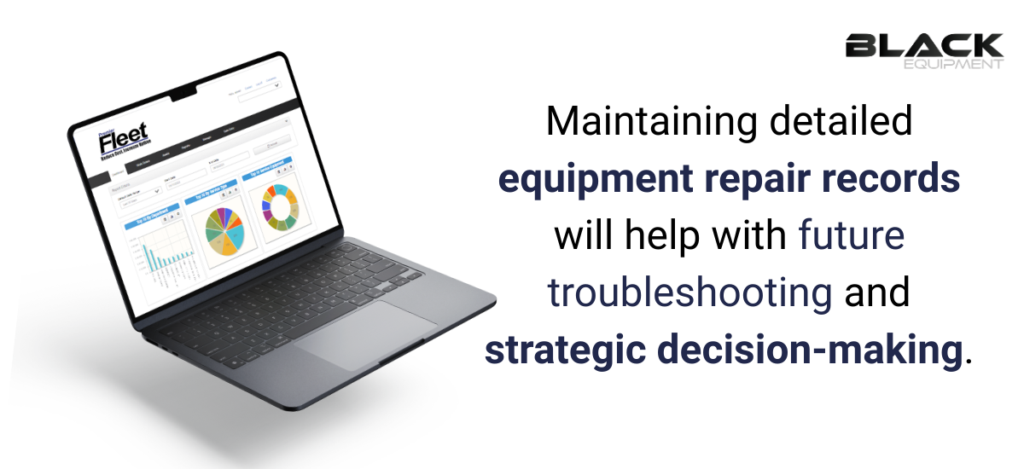
At the conclusion of the service visit, the details of your equipment issues and repairs should be provided to you on a customer sign-off report, commonly known as the repair report.
Maintaining a comprehensive record of each equipment’s repair history will help with future troubleshooting and enable you to better plan the right time to replace a vehicle. Additionally, OSHA recommends fleet managers keep such documentation so you can prove your compliance in case of an audit.
At a minimum, this report should include:
- Specific details of the equipment defects, their location on the equipment, and dates identified
- Records of all corrective repairs performed, including parts used and service dates
- Confirmation that the equipment passed all inspection points before returning to the floor
- The name of the inspector
Black Equipment customers receive all this service data and more through our proprietary Premier Fleet maintenance portal. The platform provides full fleet maintenance history, problems, repair costs, and trends to help with strategic decision-making.
Pro Tips: How to Get the Most Out of Your Service Visits
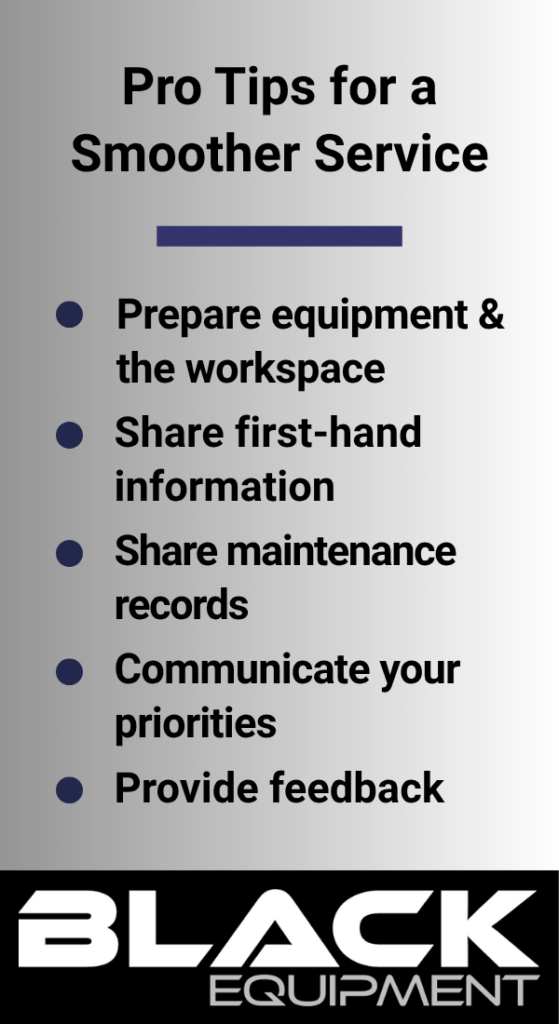
Want your forklift service calls to be more efficient and less stressful? Here are a few key actions you can take:
- Prepare the equipment and workspace. Ensure the forklift is accessible and parked on a flat, well-lit surface when technician arrives.
- Share detailed, first-hand information. Have the operator explain the issues and recent truck history directly to the technician.
- Keep maintenance records accessible. Provide the technician with repair and replacement parts records that might help them spot patterns.
- Communicate your operational priorities. Tell the technician what role the forklift plays in your workflow and if you have any upcoming peak periods.
- Provide feedback after the visit. Don’t be shy about letting your service provider know what went well and what they can improve. This can help future visits run more smoothly.
Forklift Service Call FAQ
Our goal is to provide peace-of-mind to help you navigate tough decisions. Here are the answers to many common forklift service questions.
- What are the most common warning signs that a forklift needs immediate repair? Common signs of equipment defects include breaking and stability issues; power, performance, and drivability problems; hydraulic and fluid‑related issues; electrical, battery, and warning indicators; and strange sounds, smells, or smoke.
- What happens during the initial dispatch process for a forklift service call? You will need to provide your service partner with the make, model, and serial number of the vehicle and a description of its issues. Your service partner should confirm when the technician can see your vehicle.
- What should I expect when a technician arrives onsite for a repair visit? The technician will want to speak with the person who requested the service and experienced the equipment issue to learn about the problem. They will also complete a site check and lock-out/tag-out of the vehicle.
- How can I prepare my forklift and workspace to help the technician complete repairs more efficiently? You can ensure the forklift is easily accessible, parked on a flat, well‑lit surface, and have the unit number and hour meter reading ready.
- How does partnering with a mobile service provider like Black Equipment help reduce downtime during repairs? Black Equipment provides 24-hour Emergency Service at all our locations. With over 180 factory-certified technicians across locations, you can expect prompt on-site service. If the unit needs to be taken back to our shop for repairs, the customer is eligible to rent a replacement unit for a 15% discount.
Final Thoughts: Prepare Now for Peace-of-Mind
Knowing what to expect from a technician service visit reduces stress and speeds up resolution. By completing daily pre-shift safety checks and promptly requesting repairs, you can maximize your equipment uptime and warehouse safety.
The right partner will help the repair process go smoothly. Consider setting up a maintenance contract with Black Equipment now so you’re prepared. When you partner with Black Equipment for your fleet maintenance needs, you can expect:
Mobile service and mobile tire and battery/charger support
Certified, expert technicians who receive ongoing safety and mechanical training
Prompt response times with technicians dispatched within four hours for normal repairs and immediately for emergencies
OR
Click for your local branch