
Choosing the Right Rough Terrain Forklift Rental for Outdoor Projects
Intro
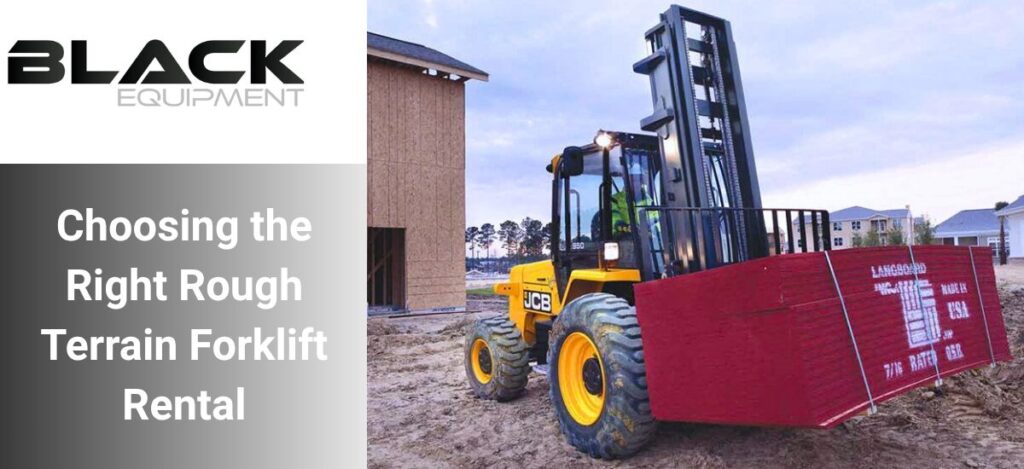
Matching the right equipment to the job is critical, especially when the job is outdoors.
Outdoor projects come with unique variables that standard forklifts can’t handle, such as terrain, weather, load demands, and power needs.
The right rough terrain forklift rental will maximize your outdoor project’s productivity and uptime, reduce safety risks, and fit your budget. In this outdoor forklift rental guide, you’ll learn how a well-planned construction site forklift rental strategy can help you approach your next job with confidence.
Class VII Certification: What Every Renter Must Know
“There is no universal Class VII license or certification.
OSHA requires every employer that rents or uses rough terrain forklifts or telehandlers to provide equipment-specific training (including variable-reach load charts), conduct a practical evaluation, and maintain a simple written certification record.
This responsibility belongs entirely to the renter’s employer — not the rental company — and applies to all Class VII machines. “
What Are Rough Terrain Forklifts?
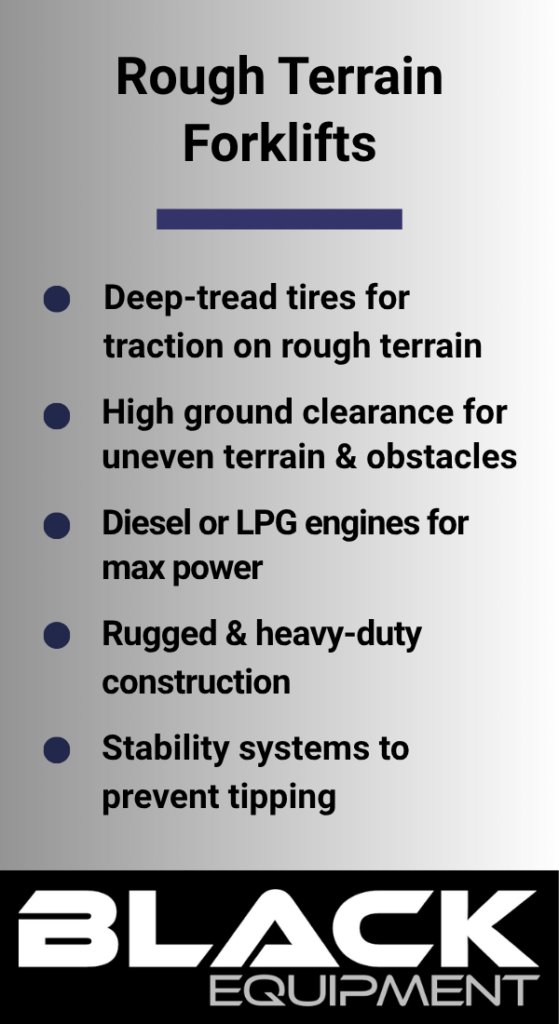
Rough terrain forklifts are rugged specialty machines suited for outdoor use and heavy lifting. The trucks, which are classified by OSHA as Class VII forklifts, are designed to meet the demands and harsh environments found on construction sites, farms, lumberyards, forestry sites, quarries, and other outdoor worksites.
Key Features
- Tires: Deep‑tread pneumatic or foam‑filled provide traction and shock absorption on soft, rocky, or uneven ground.
- High ground clearance: An elevated chassis prevents bottoming out on ruts, debris, or uneven terrain.
- Engine power: Diesel or LPG provides sufficient power and torque needed for lifting heavy loads, travelling hills, and long shifts; although some limited outdoor sites may prefer electric.
- Heavy-duty construction: Reinforced frames and good suspension will support heavy lifting.
- Stability systems: Wide wheelbases, oscillating axles, anti‑tilt systems prevent tipping.
Why Rent for Outdoor Projects?
A rough terrain forklift rental is a great solution for companies that need heavy-lifting power for tough outdoor settings in a temporary capacity. Here are some of the ways outdoor forklift rentals can help optimize your fleet and business.
Operational Advantages
- Meet demand surges. By renting, you can scale quickly and maintain flexibility for seasonal, short‑term, or project‑based needs common in construction, agriculture, and 3PL.
- Get the job done with low commitment. Gain access to specialized equipment without long‑term ownership costs.
- Maximize your uptime. Maintenance, repairs, and uptime support are often included in rental agreements, which is critical for outdoor environments where breakdowns are more common.
Financial Advantages
- Maintain a manageable budget. Renting means fixed monthly payments, rather than committing to large capital expenditure and ongoing maintenance costs.
- Try before you buy. Test out new technology and outdoor equipment types before committing.
- Open up new markets. Renting these heavy-duty machines may present opportunities to take on new projects in an outdoor setting.
Industry Considerations: Matching Equipment to Real-World Outdoor Needs
Rough terrain forklift rentals can be beneficial in multiple industries, but for different reasons. You’ll want to understand your unique jobsite’s needs before selecting a machine. Below are several features and use cases that are common to select industries and may warrant outdoor forklifts.
Jobsite Features by Industry
| Key Factor | Construction | Agriculture (Crops & Livestock) | Lumberyards & Industrial Yards | Manufacturing with Outdoor Storage |
| Terrain | Primarily unimproved ground such as mud, slopes, debris, and uneven grades | Soft soil, mud, gravel, fields | Mixed surfaces such as gravel, asphalt, dirt | Semi‑improved surfaces, docks, staging areas |
| Equipment Needs | 4WD, durability, high ground clearance, diesel power, telehandler reach for multi‑story work | Pneumatic/foam‑filled tires, moderate lift heights, long outdoor shifts, operator comfort (AC cabs) | Maneuverability and durability; mid‑range lift capacities; 2WD or 4WD depending on yard layout | Pneumatic tire forklifts for heavier loads (such as steel, raw materials), consistent reliability |
| Common Loads | Pallets of materials, lumber, steel beams, masonry | Hay bales, feed, fencing, seed, fertilizer | Timber, pallets, bulk materials | Pallets, bulk materials, raw materials |
| Attachment Needs | Buckets, jibs, platforms | Bulk bag lifter, bale clamps | Fork extensions, fixed fork spreaders, telescopic forks, bale clamps, drum clamps | Rotators, fork positioners, carton clamps, bale clamps, block handlers, pipe clamps |
Types of Outdoor Forklifts
Once you understand the jobsite conditions and use cases, you can begin to evaluate your equipment options. There are multiple types of rough terrain forklifts that differ by design and the purpose they serve.
All-Terrain Forklifts
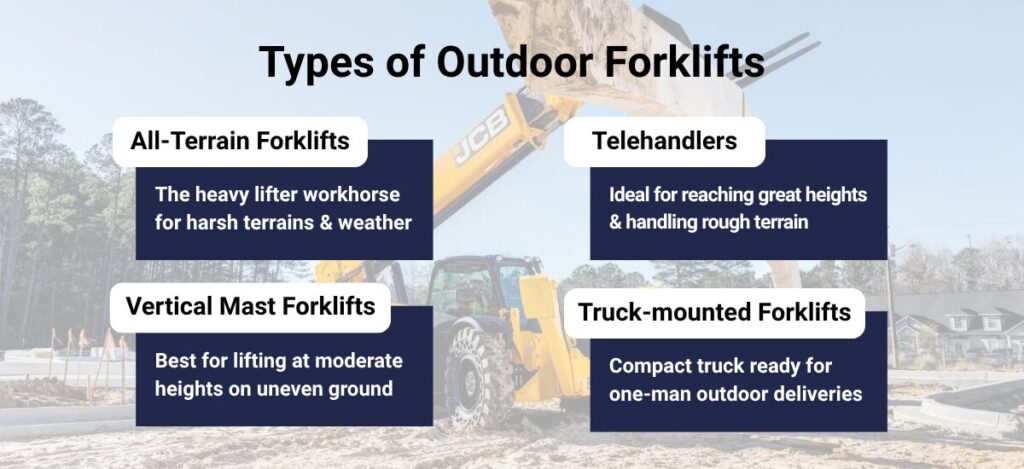
All-terrain forklifts, also called rough terrain forklifts, are the go-to Class VII forklifts designed for outdoor jobs. These rough terrain workhorses can handle a variety of surfaces and unpredictable jobsite conditions.
Industries: Construction, agriculture, farming, lumber and forestry, landscaping, mining, oil and gas
Pros:
- Solid traction and stability in mud, gravel, sand and slopes, thanks to large pneumatic tires, high ground clearance, and 4WD options
- Diesel engines (or modern hybrids) deliver the power needed for lifting and climbing in demanding outdoor conditions
- High productivity with heavy loads
- Built to withstand all-weather outdoor use
Cons:
Potential ground damage on soft or wet soil, as large tires can create ruts
Larger footprint due to bulkier size limits use and maneuverability in confined areas
Vertical Mast Forklifts
Vertical mast forklifts are best for repetitive lifting on uneven ground. They have a fixed vertical lifting mechanism, which provides them with stability as they lift loads straight up and down.
Industries: Construction, agriculture, farming, lumber and forestry
Pros:
- Stability required for heavy lifting on uneven ground
- The ability to tackle unimproved ground, thanks to high ground clearance and all-wheel drive
- Speedy operation and maneuverability due to four-wheel steering for increased productivity
Cons:
- Limited reach compared to telehandlers
May struggle to handle muddy terrain
Telehandlers
Telehandlers, also known as variable-reach or telescopic-boom forklifts, feature a telescoping boom that makes this machine ideal for high stacking and reaching over obstacles.
Industries: Construction, agriculture, farming, landscaping, mining, oil and gas
Pros:
- With telescopic booms that extend forward (7–42+ ft) and upward (up to 50+ ft), operators achieve superior reach and placement without the need to reposition the machine
- High performance on rough terrain, thanks to 4WD, high ground clearance, and rugged design
- High versatility with a wide range of quick-change attachment options
Cons:
- More expensive to purchase, rent, fuel, and maintain than vertical-mast forklifts
- Load capacity drops significantly as the boom extends
- Requires advanced training; operators need Class VII certification plus load-chart knowledge for variable reach (see the Intro inset).
Truck-Mounted Forklifts
Truck-mounted (or piggyback) forklifts hitch to the rear of a delivery truck or trailer for easy delivery and transport and detach on-site.
Industries: Building material delivery, lumberyards, residential and light commercial construction, roofing
Pros:
- Rides attached to the back of delivery trucks for maximum portability
- One driver or operator can unload a full truckload without additional crew, saving time and labor
- Compact size and tight turning radius leads to high maneuverability on confined jobsites
Cons:
- Limited rough terrain capability with lower ground clearance
- Smaller lift capacities, typically 3,000-5,5000 lbs
- Mounting system and forklift weight (typically 2,500–3,000+ lbs) cuts into the truck’s legal payload
7 Key Considerations for Choosing an Outdoor Forklift Rental
If you’re new to outdoor projects, it may feel overwhelming to sort through the various features and specifications of rough terrain forklifts.
Here’s a checklist of seven essential factors to keep in mind when choosing an outdoor forklift to rent.
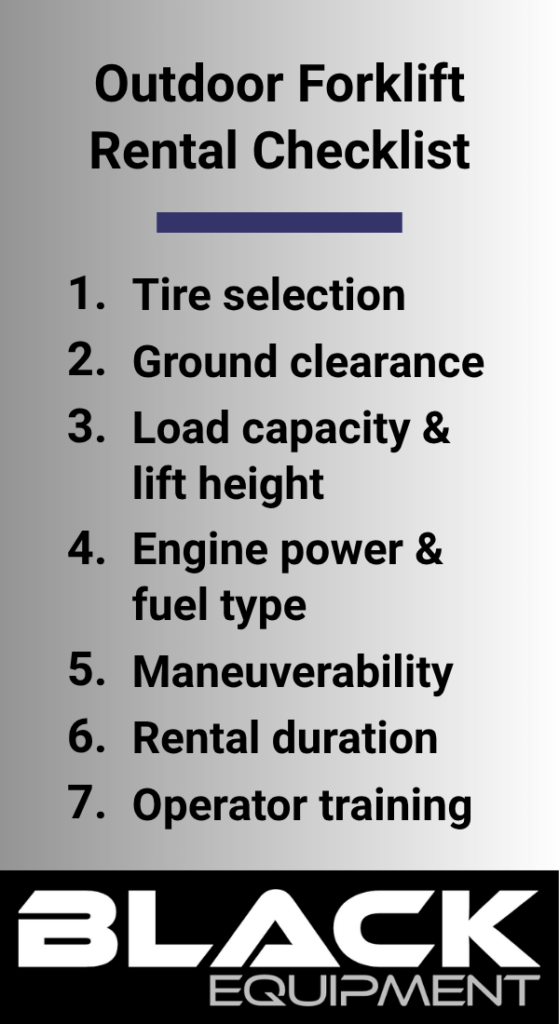
1. Tire Selection
Rough terrain forklifts with rugged, heavy-duty tires with deep treads will perform best on uneven, rocky, and muddy ground.
- Pneumatic tires are best for outdoor terrain; they absorb shock and have deep tread for traction.
- Foam‑filled pneumatic tires eliminate the risk of flats and are ideal for debris‑heavy sites.
- Cushion tires are suited for indoor use only; avoid these for outdoor projects.
2. Ground Clearance
Insufficient ground clearance can bring projects in all-terrain environments to a halt. High ground clearance (when the chassis is at least 12 inches from the ground) will help trucks safely travel rocks, mud, roots, or curbs without damage to the undercarriage.
3. Load Capacity & Lift Height
Rough terrain forklifts can lift anywhere from 4,500 lbs up to 23,000 lbs for demanding building jobs. To maintain job safety and productivity, determine what load capacity you might need now and in the future. Lift height is also an important factor, as the load center shifts depending on the height during extension.
4. Engine Power & Fuel Type
Can your rough-terrain forklift meet the demands of challenging terrain, hills, and heavy-lifting requirements without overheating or stalling?
- Diesel engines are best for torque, long shifts, remote sites.
- LPG engines offer cleaner emissions, as well as flexibility if you also want to work indoors.
- Electric options are limited for outdoor use but can be good for noise‑sensitive or emission-restricted areas.
5. Maneuverability
While 2WD trucks are lighter and generally more maneuverable, they can struggle in mud, sand, and gravel. 4WD offers extra traction for slopes and loose ground surfaces and might be better suited for the tough terrains and unexpected obstacles of construction, forestry, and oil sites. Additionally, a truck’s turning radius, steering angle, and axles are also important to consider.
6. Rental Duration
An understanding of your project needs and equipment utilization rates will help you choose the right rental duration for your budget. Delivery and pickup fees, insurance, and maintenance coverage can also affect pricing.
7. Operator Training
Operator training is OSHA‑required for Class VII equipment and operators must be re-evaluated at least every three years or sooner (see Intro inset). You’ll want to ensure in advance that you have certified operators prepared to drive rough terrain rentals, without compromising safety or productivity.
3 Practices for Successful Outdoor Forklift Rentals
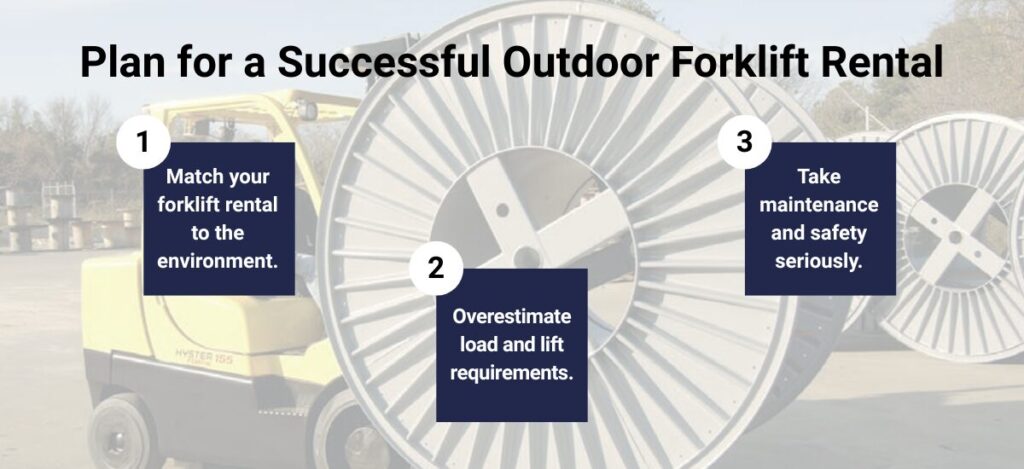
As with any equipment or rental purchase, renting outdoor forklifts can be a detriment to your job if done without careful consideration and planning. Here are three helpful actions you can take to minimize your risk and rent a high-performing outdoor forklift rental.
1. Match your forklift rental to the environment.
Conduct a jobsite assessment to determine the terrain that equipment will need to navigate. You should consider the soil types, presence of slopes or hills, and any debris or obstacles. These factors will determine what kind of tires will perform best, as well as the level of ground clearance needed.
Exposure to inclement weather, such as heat, water, and dust, should also impact your forklift selection. Look for protective elements, such as cooling systems and sealed parts.
Why this is important: Selecting the best forklift for your jobsite conditions will reduce your risk of equipment damage and downtime.
2. Overestimate load and lift requirements.
Forklifts must be able to handle the maximum lift and load requirements of the job. First, calculate the max load + load center + stacking height. Then, rent a forklift that can exceed the heaviest load and maximum reach you anticipant for current and future project needs.
Why this is important: If your forklift gets overloaded on the job, you may be paying for damages or injuries.
3. Take maintenance and safety seriously.
Don’t skimp on safety measures. After ensuring your operators meet OSHA’s training requirements for the equipment you’d like to rent, implement the following practices.
- Stability practices: To prevent tipping, follow proper load handling, travel slowly (under 5 mph), proper load handling, utilize safety systems (such as rollover protective structures [ROPS], cameras, and alarms), and take care when navigating slopes and other obstacles.
- Prepare for environmental hazards: Maintain optimal operator visibility by clearing mud, snow, and dust from windows to avoid crashes.
- Prioritize operator comfort: Opting for ergonomic seating and climate control increase operator comfort, focus, and safety.
- Don’t skimp on maintenance: Confirm daily inspection and service requirements are being met on schedule.
Why this is important: Rough or unpredictable terrain can make rollovers and crashes more likely. Take the steps to protect your brand and give your crew the peace-of-mind they will go home safely.
Rough Terrain Forklift Rental FAQ
At Black Equipment, our goal is to provide the peace-of-mind you need to navigate tough decisions. Let’s make it easy: Here are the answers to many common rough terrain forklift rental questions.
- What is a rough‑terrain forklift and when should I rent one for outdoor work? Rough terrain forklifts are Class VII machines built for outdoor lifting on unimproved surfaces. Rent one when your project involves mud, slopes, debris, or uneven ground.
- How do I match the right forklift to my terrain type? Choose a forklift with pneumatic tires, 4WD, and high ground clearance for mud, gravel, or uneven ground. For mixed outdoor surfaces like asphalt or packed dirt, truck-mounted may also work. All-terrain forklifts may create ruts in soft or wet soil or grass.
- How much lift height and load capacity do I need for outdoor material handling? Assess the maximum load and lift requirements of your job and rent a forklift that can exceed both.
- Should I rent a telehandler or a vertical‑mast forklift for my project? Choose vertical mast forklifts for repetitive lifting heavy loads at moderate heights. Use telehandlers for lifting materials to great heights and over obstacles.
- How do weather conditions like rain, snow, wind, or heat affect forklift performance outdoors? Exposure to inclement weather can damage traditional forklifts over time. Many outdoor forklifts have protective features, such as cooling systems and sealed parts. Operators should always clean windows of water, snow, mud, or dust, which can hinder visibility.
- What training is required for operators using rough‑terrain forklifts? Operator training is OSHA‑required for all Class VII forklifts and operators must be re-evaluated every 3 years or sooner (see Intro inset). Telehandlers also require load-chart training for variable reach.
- What factors should I consider when choosing a rough terrain forklift? You will need to consider a variety of factors, including terrain and site conditions, weight of load, height of load lift, and operator training.
Final Thoughts: How Black Equipment Supports Outdoor Forklift Rentals
Developing an effective construction site forklift rental strategy is much easier with a supportive partner. If you still have questions about renting rough terrain forklifts, Black Equipment Co. experts can help you assess your requirements and provide tailored rough terrain forklift rental recommendations that benefit your fleet.
With Black Equipment’s flexible rental options, businesses have access to:
- A wide selection of Hyster and Yale specialty equipment
- Other rough terrain vendors (JCB Telehandlers, Sellick Forklifts)
- Parts availability
- Fast delivery and flexible rental terms
- Mobile service, tire service, battery/charging support
- Various maintenance options
OR
Click for your local branch